


What if the subtle softening of your silhouette or the persistent afternoon haze is not a byproduct of time, but a signal of a deeper metabolic shift? You have likely noticed it during these crisp May afternoons. A sudden dip in energy after a light lunch. Skin changes that feel at odds with your curated self-image. These are the often-overlooked signs of insulin resistance in women, a condition that now affects 30.2% of perimenopausal women according to 2025 PubMed data. It is a quiet disruption of your internal resort state. A whisper asking for a more refined metabolic rhythm.
You know the feeling of a day that loses its flow, where vitality feels like a distant destination. It is exhausting to feel your body working against your aesthetic and health goals. This curated metabolic edit will show you how to identify these early markers and offer an elegant, natural path to restore your internal balance. We will explore the subtle sensory signals of metabolic health and the refined solutions, like natural GLP1 alternatives, that help you reclaim an effortless sense of well-being before winter fully takes hold.
Key Takeaways
- Recognize the post-meal haze. Distinguish between a restful pause and the energy ebb that signals a metabolic shift.
- Identify the subtle signs of insulin resistance in women, from a shifting silhouette to the persistence of weight around the midsection.
- Observe the texture of health. Learn how skin changes serve as a canvas for your internal metabolic rhythm.
- Master the Art of the Walk. Discover how a brief post-meal stroll restores the metabolic tide and smooths the glucose curve.
- Curate your plate with intention. Prioritize protein and fiber to maintain an effortless internal flow throughout the South African day.
The Subtle Shift: Identifying the Sensory Signs of Insulin Resistance
The South African autumn is a season of transition. As we move through May 2026, the vibrant energy of the coastal summer often gives way to a lingering lethargy. This is not merely a change in the weather; it is a moment for a metabolic edit. When your internal rhythm feels out of sync with your curated lifestyle, it is time to look closer. The body speaks in whispers before it shouts. Identifying the subtle signs of insulin resistance in women requires an attunement to these sensory shifts. It is about recognizing when your energy ebbs instead of flows, particularly after a meal that should have provided fuel.
For a comprehensive overview of insulin resistance, one must understand that this is a disruption of glucose transport. When cells become less responsive, the body struggles to maintain its poise. This often manifests as a magnetic pull toward refined sugars. It is a biological signal, not a lack of discipline. As of February 2026, global data suggests that 26.53% of the population experiences this metabolic friction. In the South African context, the post-holiday season is the peak time for this audit, as the cumulative effects of festive indulgence begin to surface in the silhouette and the spirit.
Skin and Texture: The External Canvas
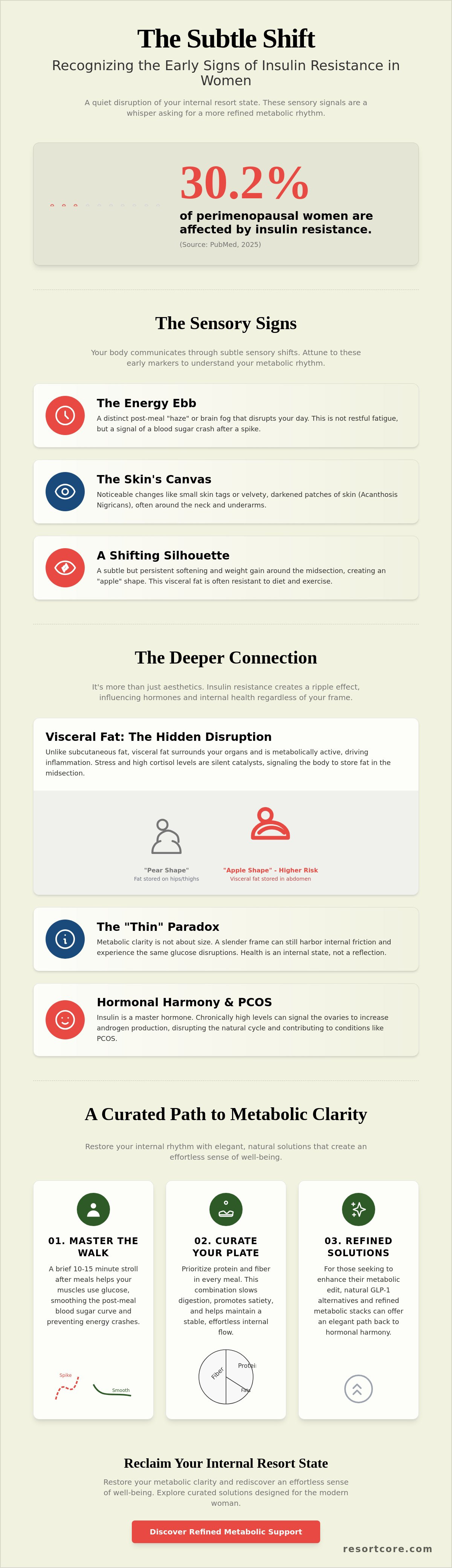
The skin is a mirror of internal chemistry. High insulin levels often leave a visible mark on the external canvas. You might notice acanthosis nigricans; velvety, darkened patches of skin typically found around the neck or underarms. These are not mere blemishes. They are markers of a metabolic tide that is too high. Similarly, the sudden appearance of small skin tags suggests a disruption in growth factors driven by insulin. These tiny interruptions signal a need for a more refined internal balance.
The Energy Ebb: Beyond Simple Fatigue
The afternoon slump is rarely just about a late night. It is a failure of glucose to reach its destination. When the mental silhouette becomes blurred by brain fog, it is often the result of blood sugar spikes and subsequent crashes. This energy ebb disrupts the effortless flow of a well-lived day. Instead of the vitality required for a Pilates session or a sunset walk in the Winelands, you are met with a haze that refuses to lift. It is a sign that your metabolic rhythm requires a thoughtful restoration.
The Silhouette and the Cycle: Hormonal Clues in the Modern Woman
The silhouette. A biological signature. In South Africa, our social rhythm often revolves around the fire. The weekend braai is a cherished cultural staple, yet for many, it brings a subtle softening of the midsection that feels resistant to even the most dedicated Pilates routine. This specific weight distribution is among the primary signs of insulin resistance in women. When the body loses its metabolic poise, it begins to store energy as visceral fat around the organs rather than the limbs. It is a shift that disrupts the clean lines of a curated self-image.
Metabolic clarity is not reserved for the petite. The "thin" paradox reveals that a slender frame can still harbor internal friction. You may maintain a classic silhouette while experiencing the same glucose disruptions as those with a higher BMI. Understanding that lifestyle changes can lower your risk is essential for every woman. It is about the quality of the internal environment, not just the reflection in the mirror.
Visceral Fat: The Hidden Disruption
The "apple" shape is more than an aesthetic concern. It is an indicator of visceral fat, a metabolically active tissue that drives inflammation. In the fast-paced urban corridors of Sandton or Cape Town, stress acts as a silent catalyst. Elevated cortisol levels signal the body to protect the midsection, creating a stubborn layer that defies traditional dieting. This is the body's response to a modern environment that lacks the calm of a sun-drenched escape.
Hormonal Harmony: The PCOS Connection
Insulin is a master hormone. When its levels remain chronically high, it signals the ovaries to increase androgen production. This disruption breaks the effortless flow of the natural cycle, often manifesting as PCOS. Restoring this delicate balance requires a curated metabolic edit to soothe the system. For those seeking to reclaim their internal rhythm, exploring a refined metabolic stack can offer a path back to hormonal harmony.
Restoring the Escape: A Curated Path to Metabolic Clarity
Once you've identified the signs of insulin resistance in women, the path forward isn't one of restriction, but of refinement. It's the Art of the Escape applied to your internal world. As the South African sun sets earlier in May, our rhythms naturally shift toward the interior. This is the season to curate your metabolic tide. A study from diaTribe.org in December 2025 suggests that a modest 5 to 7% weight reduction can significantly improve hyperglycemia. Achieving this doesn't require force. It requires an edit.
Start with the plate. Prioritizing protein and fiber acts like a gentle anchor, smoothing the glucose curve. Then, embrace the Art of the Walk. A ten-minute stroll after a sunset dinner isn't just leisure; it's a metabolic restoration. It signals your muscles to utilize glucose with effortless precision. When paired with deep, restorative sleep, these small shifts become the ultimate metabolic edit, allowing your body to repair and reset in the quiet of the South African night.
The PureZempic Ritual: Natural Support
Traditional approaches often feel clinical and cold. The PureZempic ritual offers a more elegant alternative. By utilizing natural GLP-1 activators, this approach helps your body respond to insulin with the grace of a well-tailored silhouette. It's an essential component of a refined wellness stack, designed for the woman who values both science and aesthetics. It isn't a prescription. It's a curated supplement to your existing lifestyle that helps restore your internal flow.
Daily Rhythms: Movement as Leisure
Metabolism has an architecture. Strength training provides the framework. Think of it as the timeless structure of a classic resort. By building lean muscle, you increase your basal metabolic rate, making the management of signs of insulin resistance in women a more effortless endeavor. Pair this with the sensory joy of low-impact movement. A morning session of Pilates Body or a walk through sun-drenched landscapes provides the quiet confidence your body needs to thrive as we head into the cooler months.
Reclaiming Your Internal Rhythm
The transition into the cooler South African months is your invitation to look inward. Identifying the subtle signs of insulin resistance in women is the first step toward a more refined state of being. It is about moving from the afternoon haze toward a clear, sun-drenched vitality. You have explored the sensory markers of skin and energy. You understand the hormonal architecture of the silhouette. Now, the metabolic edit begins with intention. It's a choice to prioritize the quality of your internal environment as much as your external aesthetic.
Our approach is curated for the modern woman's wellness ritual. From your first and last Resort to healing naturally, we offer a locally manufactured South African, natural, herbal-based GLP-1 alternative that provides the support needed to smooth the glucose curve without the clinical coldness of traditional paths. It's a sophisticated tool for those who value an effortless flow in their daily life. As of May 2026, the focus remains on gentle, sustainable shifts that honor your body's natural intelligence.
Discover the PureZempic Edit: Natural GLP-1 Support for Metabolic Clarity.
Embrace this moment of clarity. Your metabolic health is a canvas of your well-traveled life. It is time to restore the escape within. You deserve a vitality that feels as timeless as the Cape coastline.
Frequently Asked Questions
Can you have insulin resistance if you are thin?
Yes, you can maintain a slender silhouette and still experience metabolic friction. This is often referred to as the "thin paradox," where visceral fat accumulates around internal organs despite a lean frame. In South Africa's fast-paced urban environments, 2026 health data indicates that internal inflammation can disrupt glucose transport regardless of your BMI. It is about the quality of the internal rhythm, not just the reflection in the mirror.
What are the first signs of insulin resistance in women?
The earliest signs of insulin resistance in women often manifest as a subtle sensory shift. You might notice a persistent haze after a midday meal or a magnetic pull toward refined sugars. Skin changes, such as small tags or velvety patches around the neck, are also primary indicators. According to 2025 PubMed research, 30.2% of perimenopausal women experience these disruptions. Recognizing these markers early allows for a more refined metabolic restoration.
How can I test for insulin resistance at home in South Africa?
While a clinical diagnosis requires a laboratory, you can monitor your metabolic silhouette at home. Measuring your waist circumference is a practical start; a measurement exceeding 80cm for women often signals visceral fat accumulation. Many in South Africa are now using Continuous Glucose Monitors (CGM) to track real-time responses to local meals. This data provides a curated view of how your body handles the glucose curve after a traditional weekend braai.
Is insulin resistance reversible with natural supplements?
Metabolic health is highly responsive to a curated lifestyle edit. Natural supplements, such as herbal GLP-1 alternatives, help restore the body's sensitivity to its own internal rhythms. By pairing these with targeted movement and protein-focused plates, you can effectively smooth the glucose tide. This refined approach focuses on restoring effortless vitality and clarity. It is about finding a natural path to balance before the South African winter fully settles in.
Disclaimer
Consult a naturopathic doctor before beginning any medication or supplements.
Resort Supplements are made in South Africa and USA in a facility that may handle nuts and other natural allergens. Get in-touch via email if you have questions.